A Guide to Islay Whisky
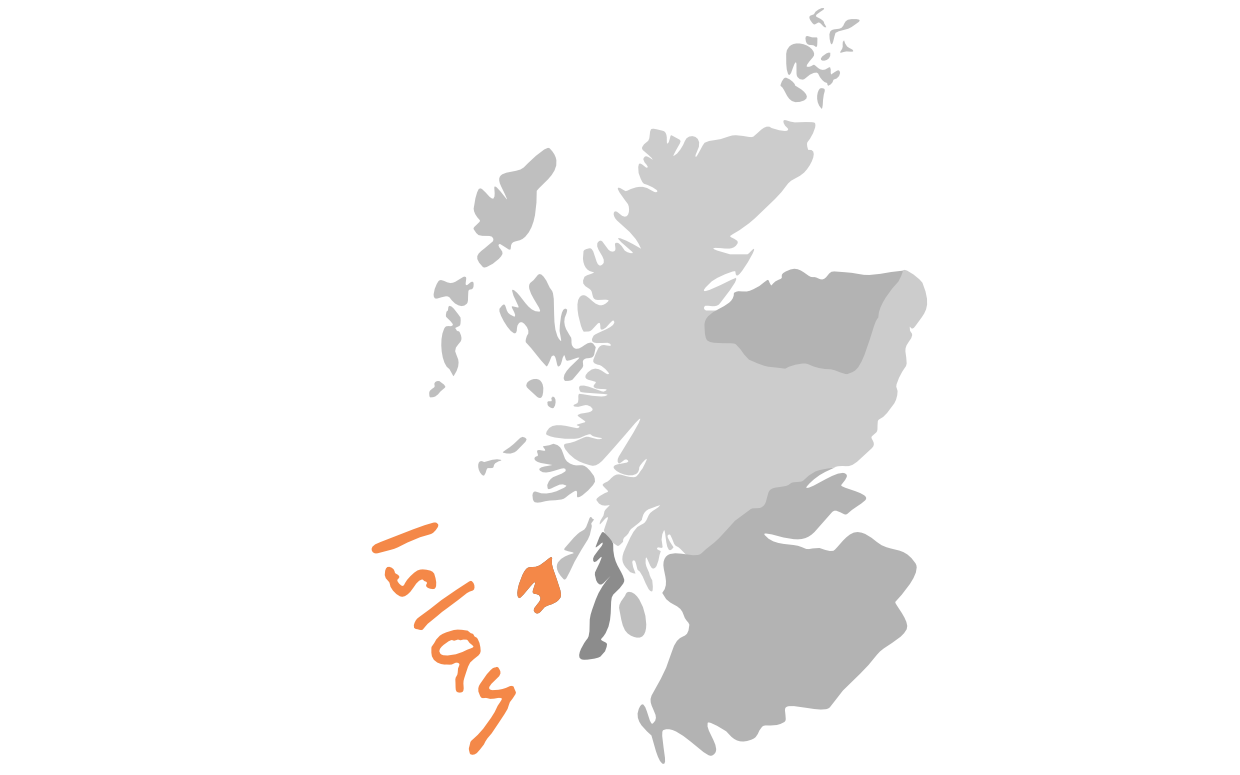
Islay is a small island off the west coast of Scotland that produces some of the most distinctive whisky in the world. Here's everything worth knowing about it.
In this guide
- An island that punches well above its weight
- The distilleries
- What makes Islay peat different?
- Where to begin
- Islay whiskies on Whisky Diaries
An island that punches well above its weight
Islay (pronounced "Eye-luh") is about 25 miles long and 20 miles wide. Fewer than 3,500 people live there. It has nine working distilleries, with more on the way. For a piece of land you could drive across in half an hour, its influence on the whisky world is extraordinary.
The reason people come to Islay, and the reason Islay whisky has its own devoted following, is peat. The island's moorland sits on deep layers of it, and for centuries distillers used it to dry their malted barley. That smoke became part of the flavour, and part of the identity.
Not every Islay whisky is heavily peated. But most of the famous ones are, and the island's reputation is built on that coastal, medicinal, deeply smoky character that no other region quite replicates.
The distilleries
Laphroaig is probably the most famous Islay distillery in the world. Its 10 Year Old is bold, medicinal, and uncompromising. The smoke here has an iodine quality that divides opinion almost perfectly. People tend to love it or find it baffling. Its royal warrant, granted by Prince Charles, appears on every bottle.
Ardbeg sits just along the coast from Laphroaig and makes whisky with a similar intensity of peat but with more fruit and complexity underneath the smoke. Ardbeg 10 is considered by many enthusiasts to be one of the finest whiskies produced anywhere, at any price. Its annual Ardbeg Day releases draw devoted fans from across the world.
Lagavulin is the third of the classic southern Islay distilleries. Where Laphroaig is medicinal and Ardbeg is fruity, Lagavulin tends to be richer and more sherried, with peat integrated into a deeper, more complex whole. The 16 Year Old is a benchmark expression.
Bowmore sits on the shores of Loch Indaal in the middle of the island and is the oldest distillery on Islay, established in 1779. Its whisky is more balanced than the southern distilleries, with peat present but not dominating. The 12 Year Old is often recommended as a good introduction to Islay for those approaching it cautiously.
Bruichladdich takes a deliberately different approach. Some of its expressions are completely unpeated, and its Classic Laddie is one of the lightest, most floral whiskies on the island. At the other extreme, its Octomore range holds the record for the most heavily peated whisky commercially produced, regularly exceeding 200 PPM. The distillery is independently minded and unusually transparent about its production methods.
Kilchoman is the newest working distillery on the island, established in 2005, and one of the few farm distilleries in Scotland. It grows some of its own barley, malts it on site, and distils, matures, and bottles everything on the farm. The whisky is younger and lighter than the old guard, but it has found its own devoted following.
Bunnahabhain sits in the northeast of the island, away from the coast that defines the southern distilleries, and makes primarily unpeated whisky. Rich, nutty, and sherried, it offers a very different side of Islay. Its Toiteach expressions show what Bunnahabhain can do with peat when it chooses to use it.
Caol Ila is the largest distillery on the island by volume and produces a significant portion of its spirit for blending. Its bottled single malts are increasingly recognised as excellent whisky in their own right, with smoke balanced by citrus and a light, coastal freshness.
What makes Islay peat different?
Peat forms differently depending on the local vegetation and climate. Islay's peat is particularly rich in seaweed and maritime plant matter, which contributes the iodine and brine notes that are the island's signature. You won't find the same character in a peated Highland or Speyside malt, even at the same PPM level. The geography is part of the flavour.
Where to begin
If you've never tried Islay whisky before, Bowmore 12 is a considered starting point. The peat is there, the coastal character is there, but nothing will knock you sideways. From there, Caol Ila 12 is a step up in intensity while remaining approachable.
When you're ready for the full experience, Lagavulin 16 is probably the most complete expression of what Islay can be. If you want something more confrontational, Laphroaig 10 and Ardbeg 10 are both exceptional.
The island rewards exploration. Each distillery has its own distinct character, and part of the pleasure is working out which style resonates with you.
Islay whiskies on Whisky Diaries
You can explore bottles from every Islay distillery on Whisky Diaries and read community tasting notes to get a sense of what to expect before you open anything. Given how distinctive these whiskies are, hearing what others found in the glass is genuinely useful preparation.